
The Shift Toward Intention
Good design works. Exceptional design begins when we treat it as a problem to be solved. That’s when a gown starts to feel intentional. Purposeful. Personal. This Bridal Market, I paid less attention to the trends themselves and more to how designers executed them. What is the bride looking for? And why might she walk away from a dress that felt like the one at first glance? Was it the proportion, the construction, the weight? This season, designers used familiar trends to answer those questions, creating gowns that consider how a bride wants to look, feel, and move. And that’s where things get interesting.
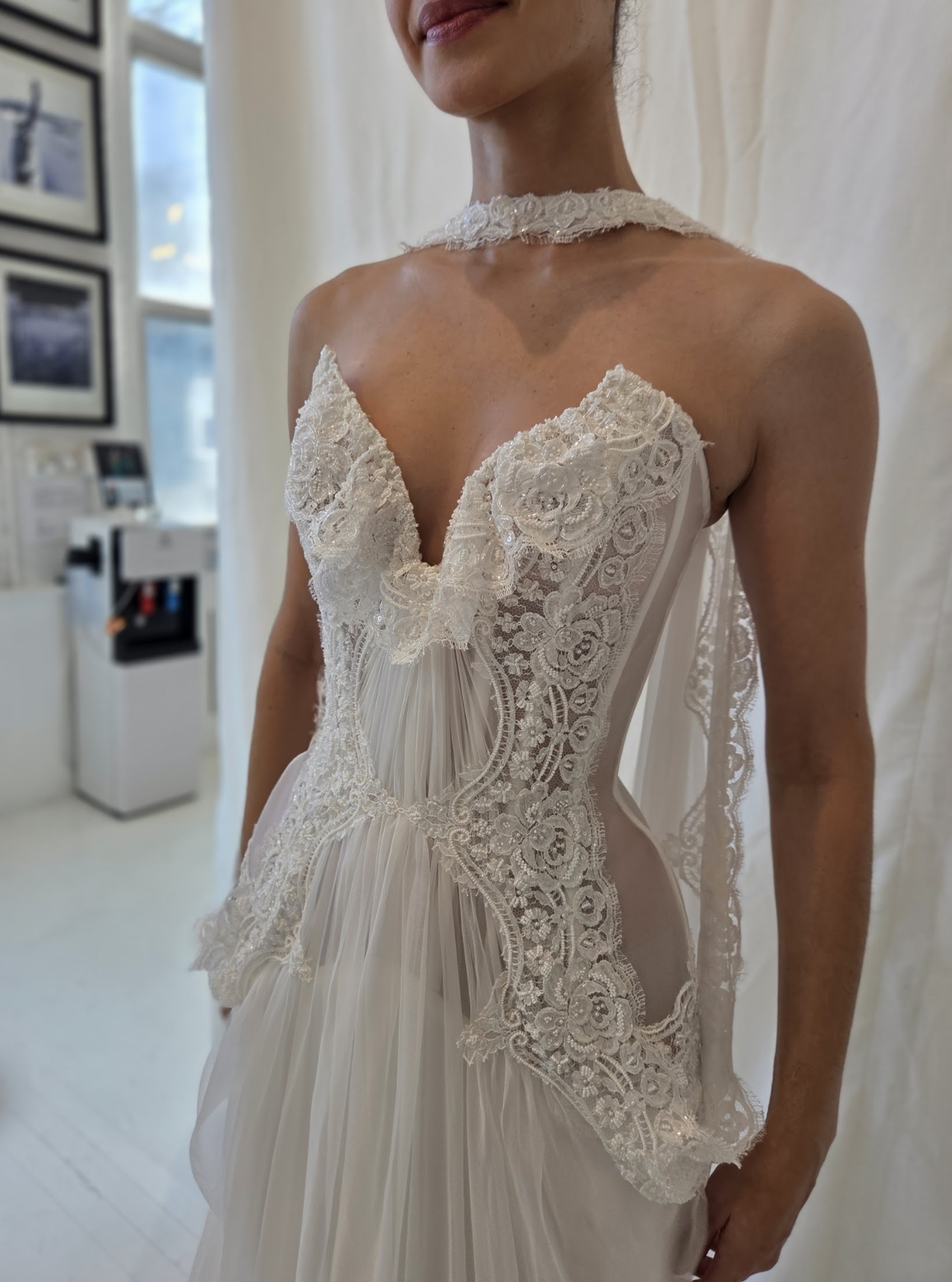
Basque waist; it’s all in the details
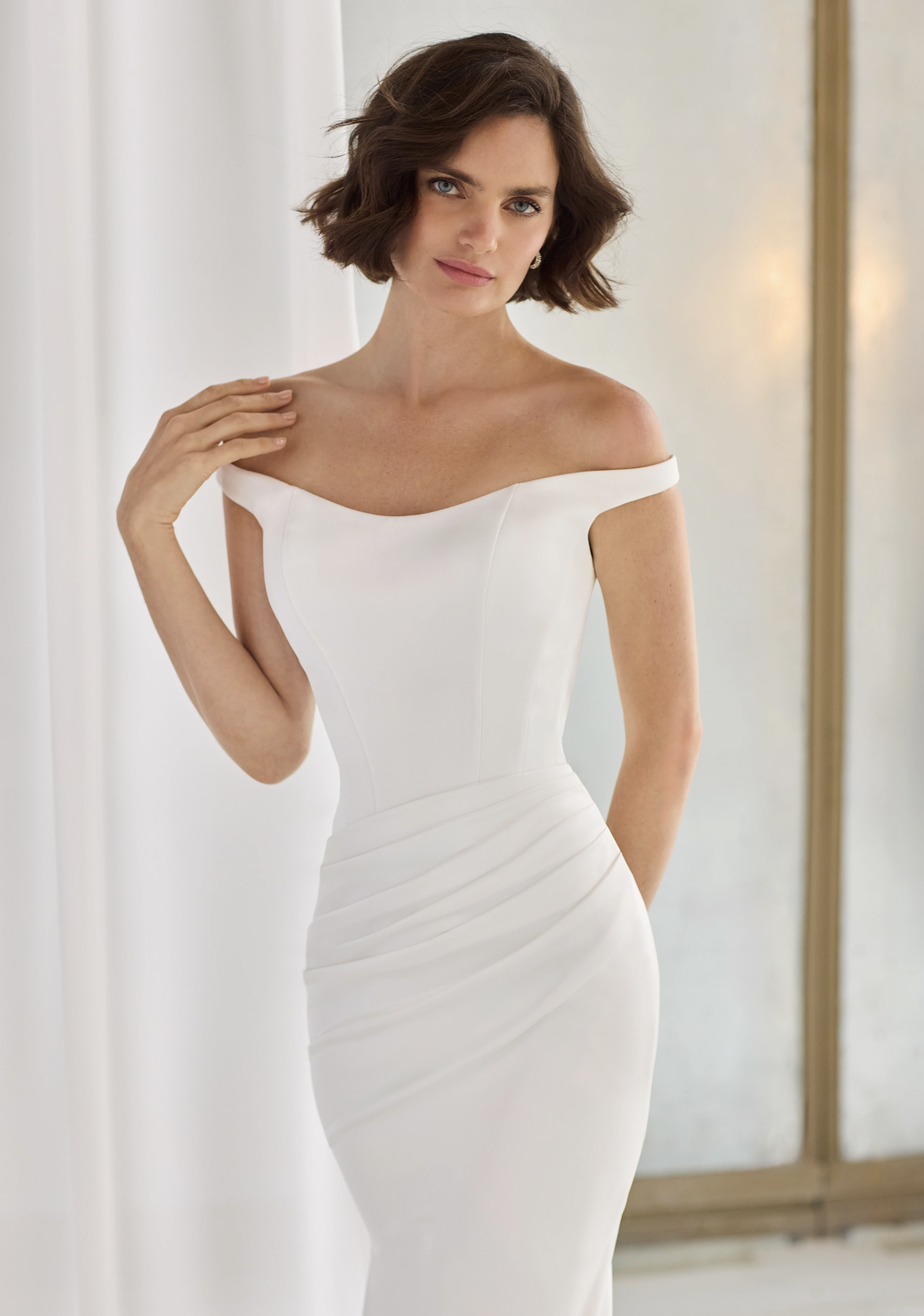
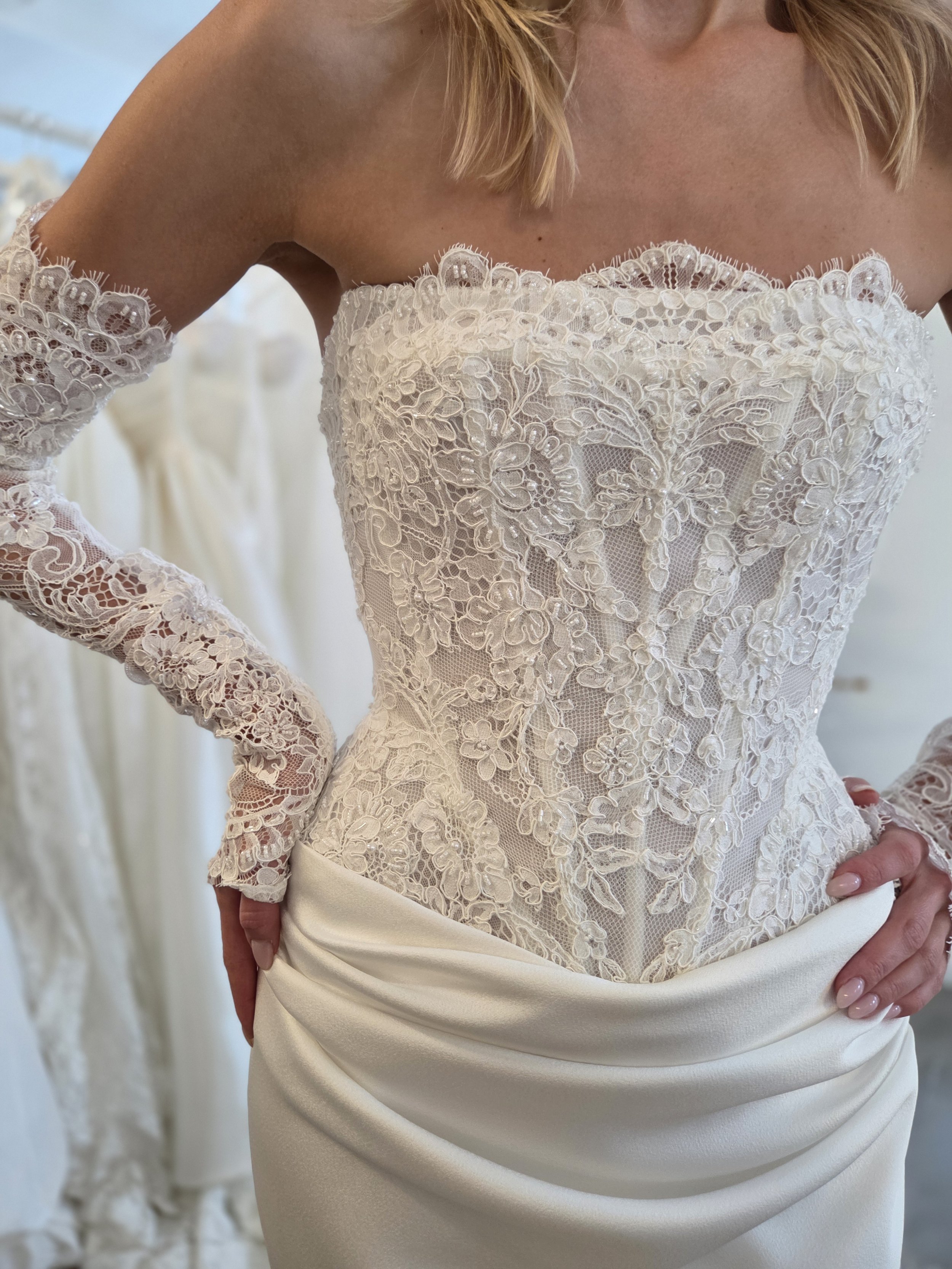
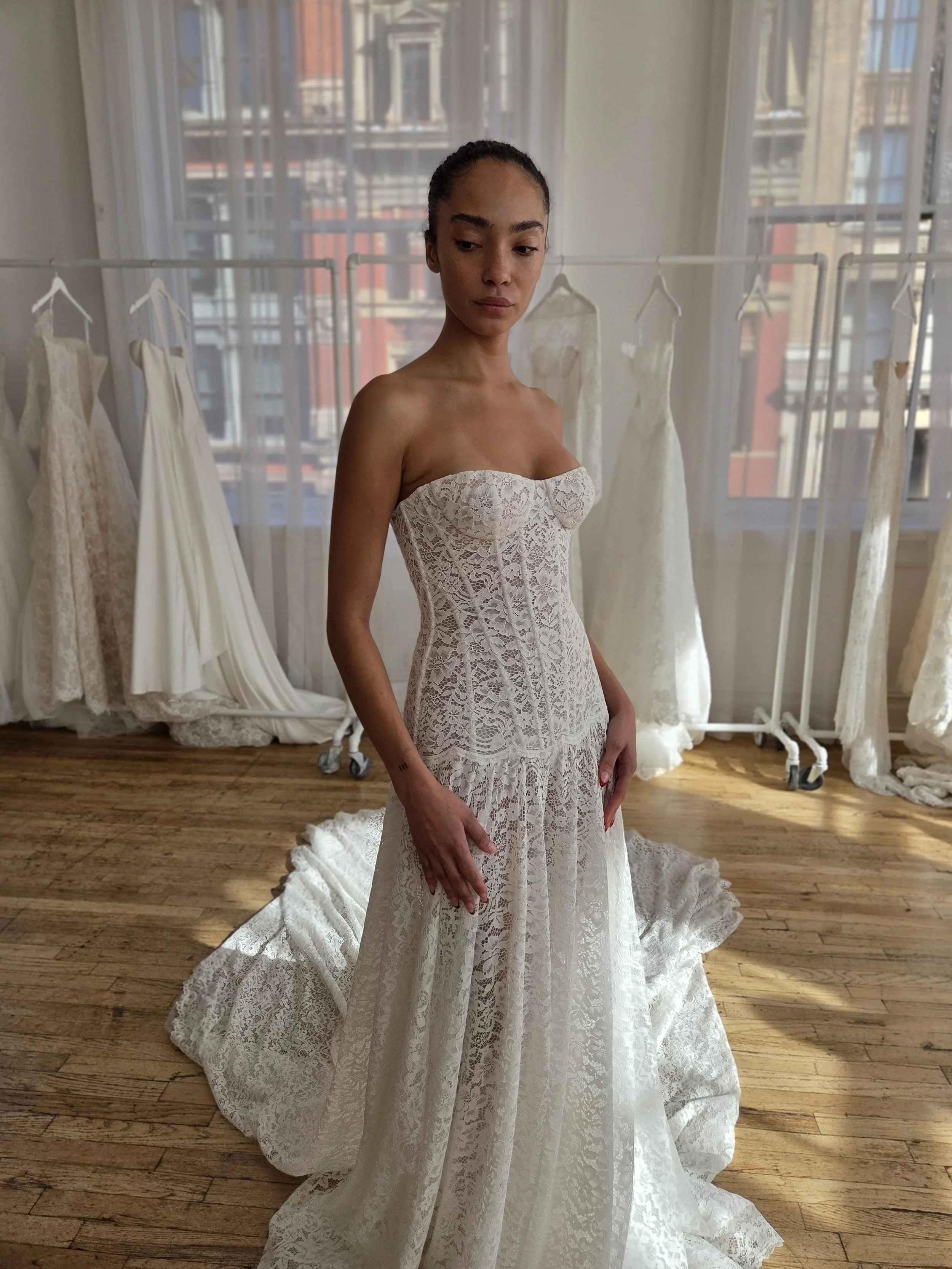
The basque and drop waist have become defining features of contemporary bridal, and they aren’t going away. But their success lies in the details. How low does the waist fall? How does the seaming frame the body? How much boning is truly necessary? Does the construction enhance the silhouette, or compete with it? Small decisions, enormous impact. Two gowns can follow the same trend and feel entirely different, one elongated and architectural, the other heavy and overly constructed. The difference comes down to proportion, balance, and restraint. The difference comes down to proportion, balance, and restraint.
“Two gowns can follow the same trend and feel entirely different, one elongated and architectural, the other heavy and overly constructed. The difference comes down to proportion, balance, and restraint.”
Texture without weight
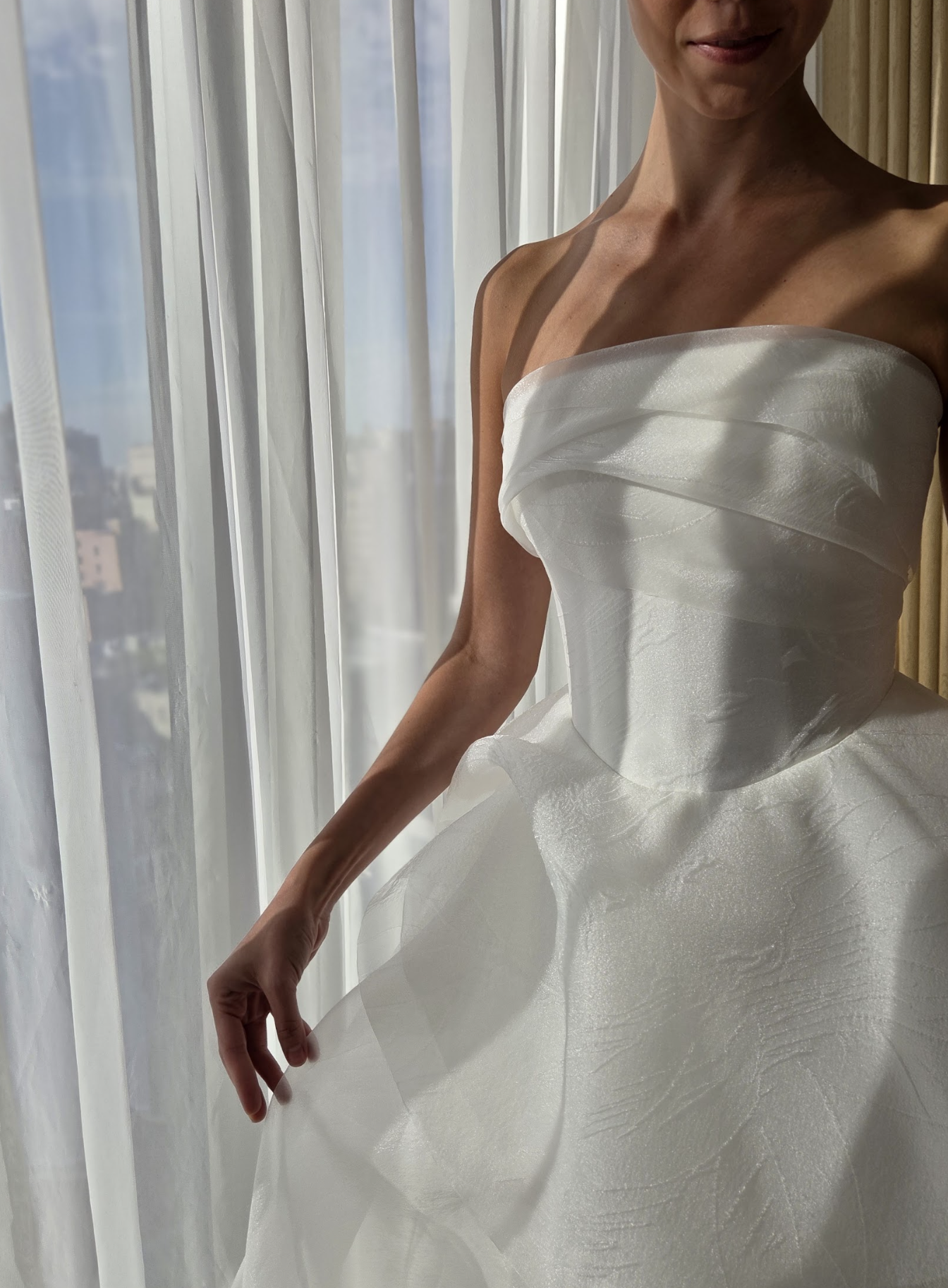
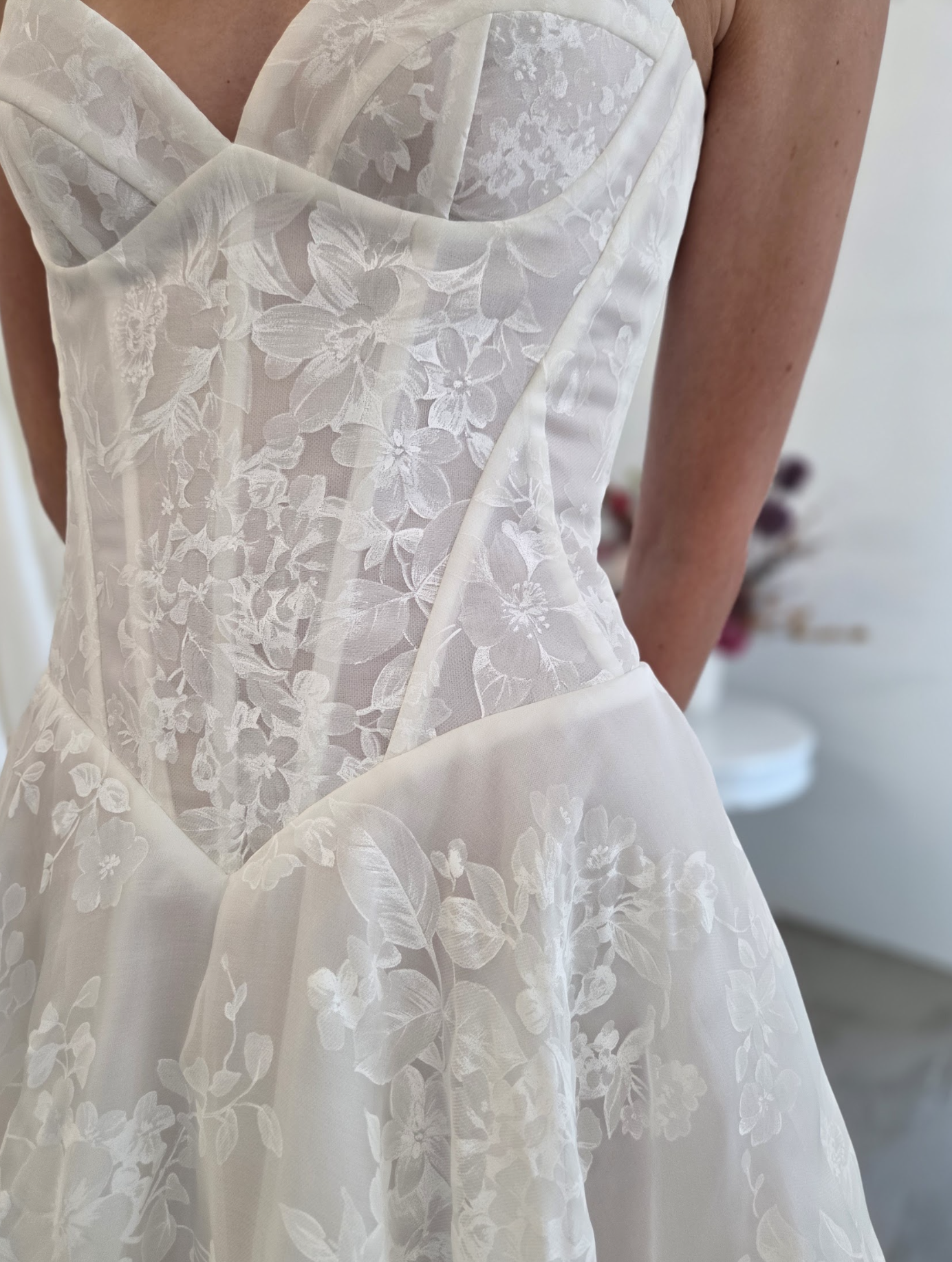
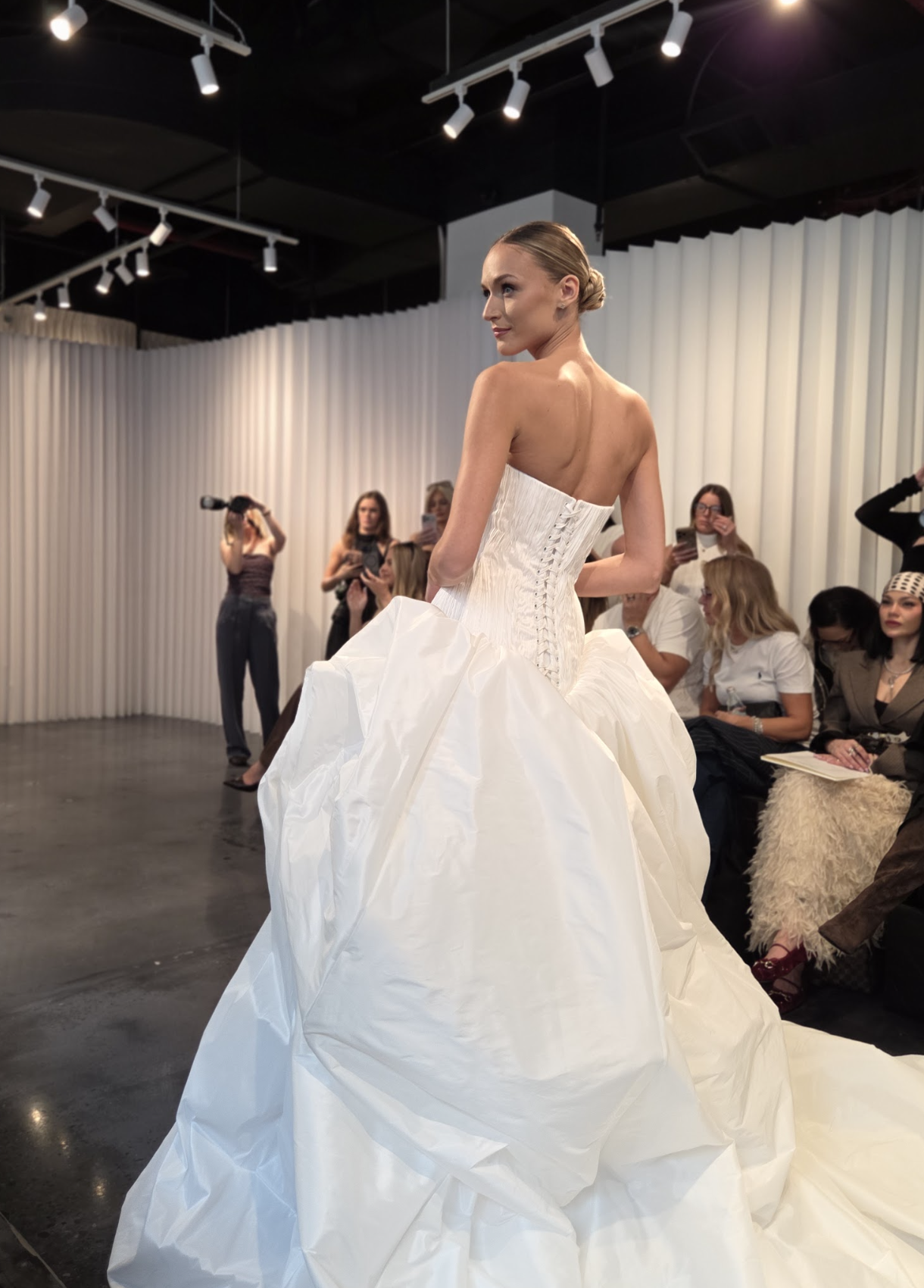
Texture has always brought dimension to bridal, offering something unexpected beyond traditional lace or smooth satin. What feels new is how it’s being used to rethink the relationship between volume and weight. The modern bride still wants the drama of a statement skirt and a beautifully shaped bodice; she just doesn’t want to feel weighed down by it. Taffeta, jacquard, and organza each offer a way to keep the presence while making the gown feel lighter to wear. So how do you preserve the drama without the weight? This is where material choice becomes more than an aesthetic decision. It becomes part of the design solution.
The evolution of draping: from effortless to elevated
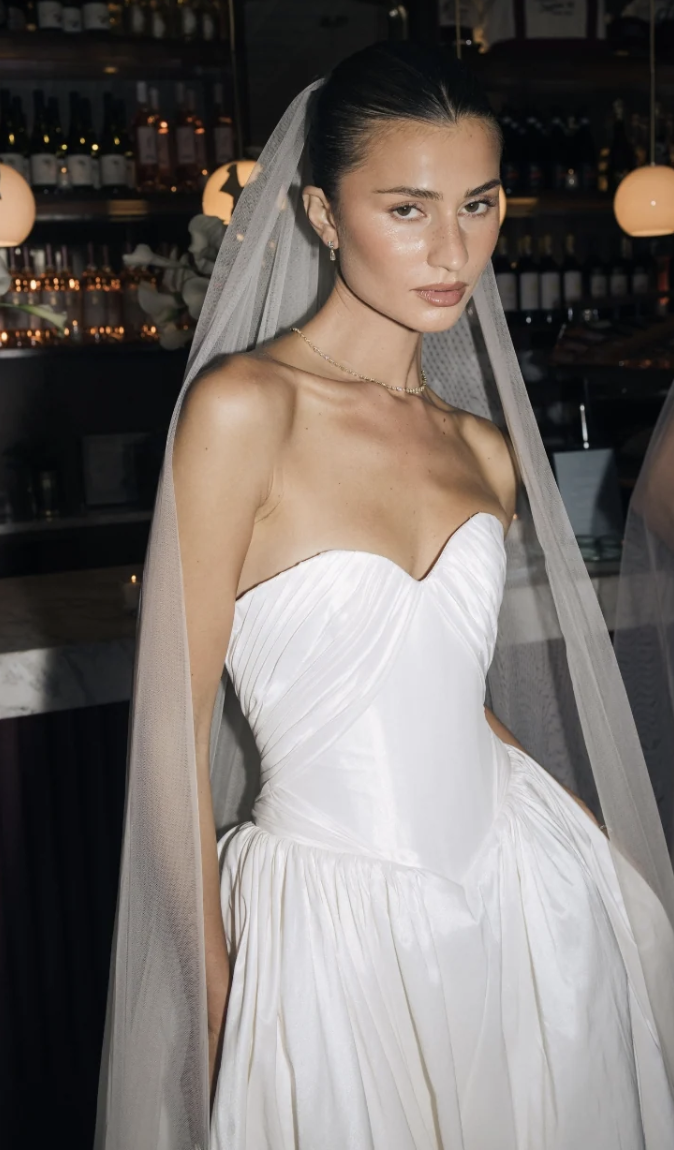
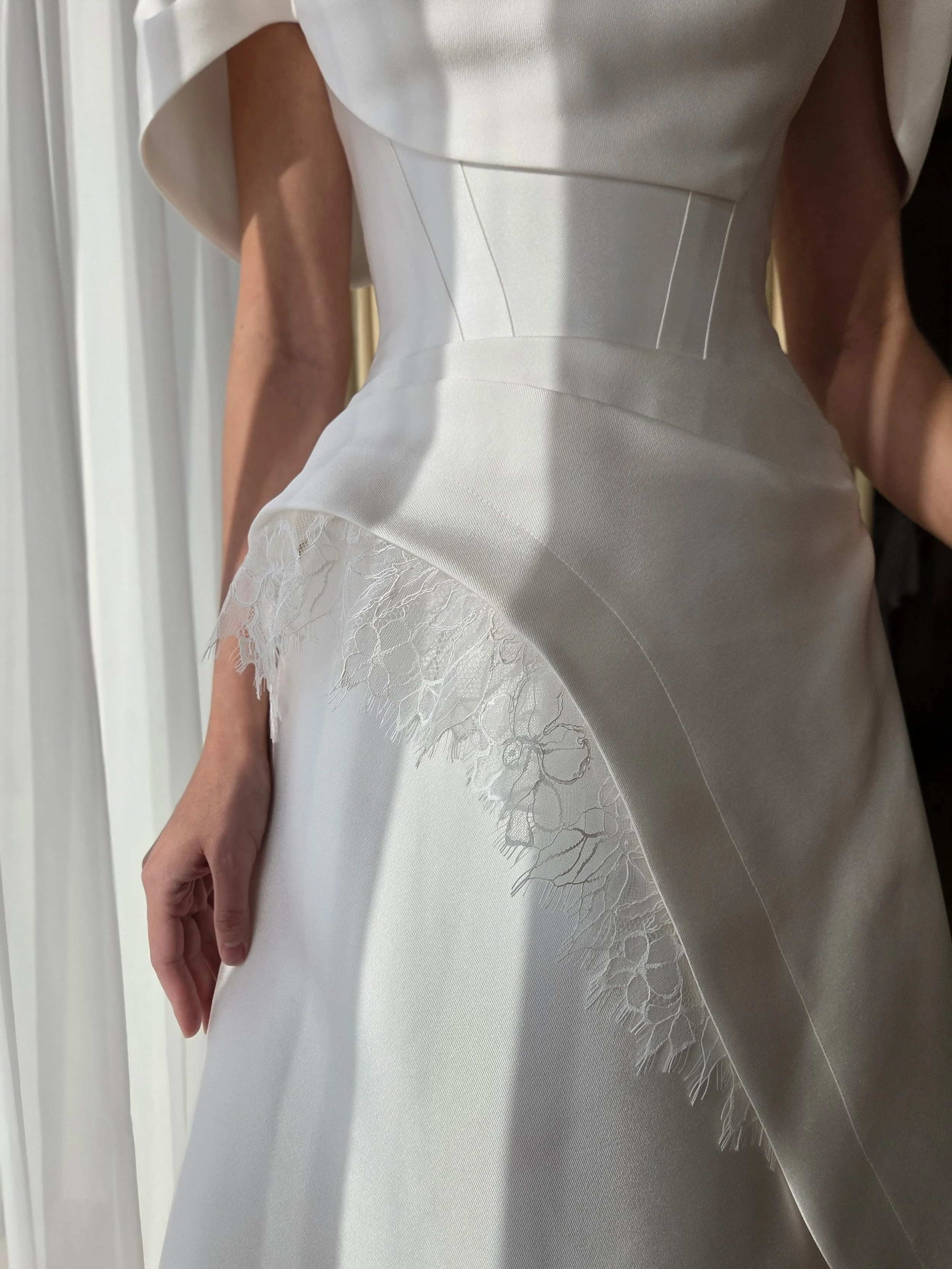
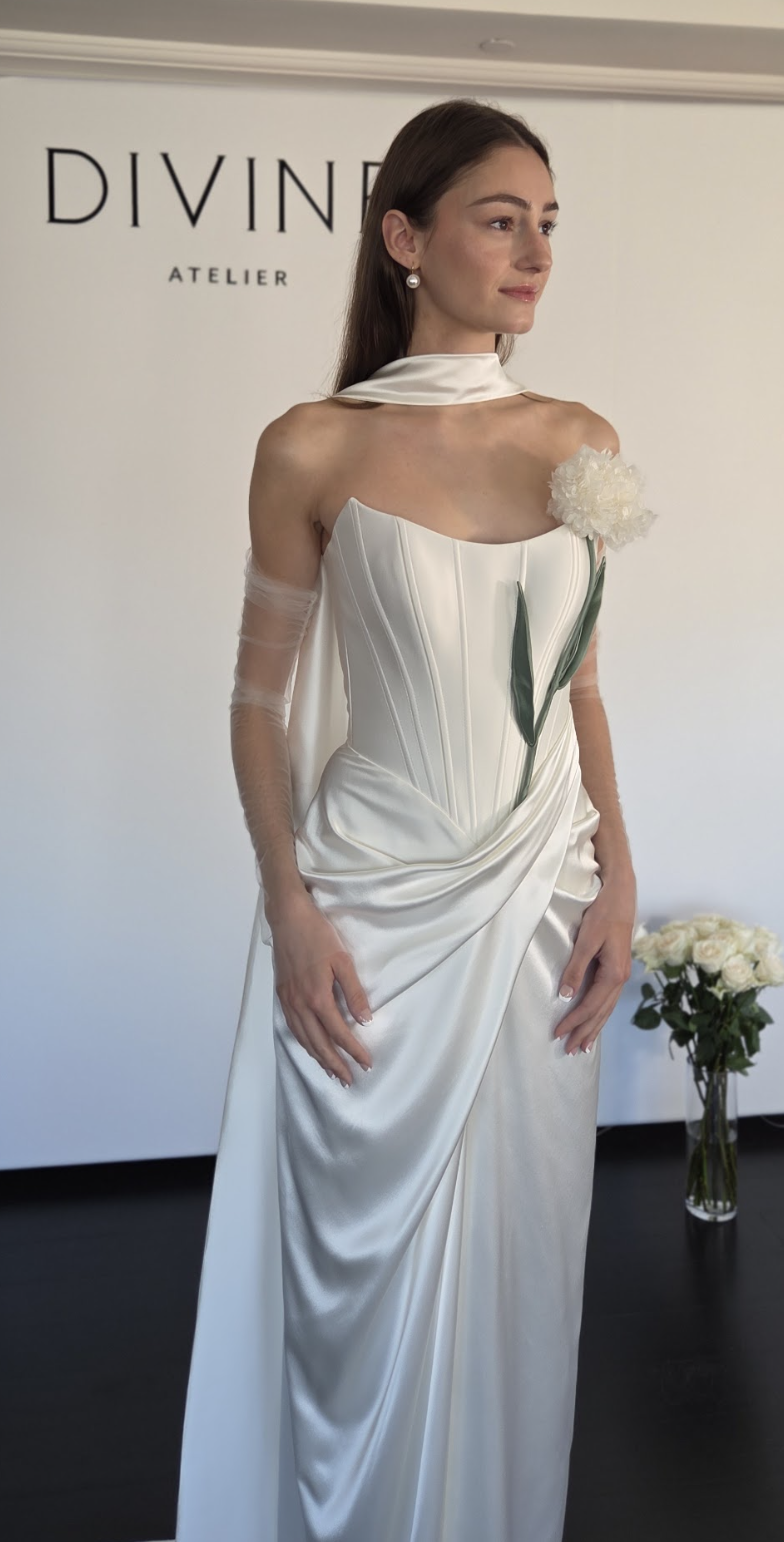
We know the draped gown, and have loved for its softness, fluidity, and effortless feel. But as a trend becomes familiar, designers have an opportunity to reinterpret it. Does the bride still want effortless? Or is she looking for something more elevated, with the same softness but a stronger sense of intention? This Market, drapes were tighter and more deliberate, drawn toward a focal point that gave the gown structure and purpose. The fluidity remains, balanced with precision. It’s proof that a trend doesn’t need to disappear to feel new. Sometimes a shift in proportion or placement is all it takes to create a gown that keeps the romance of draping while feeling more considered and architectural.
“It’s proof that a trend doesn’t need to disappear to feel new.”
THE COWL, REIMAGINED
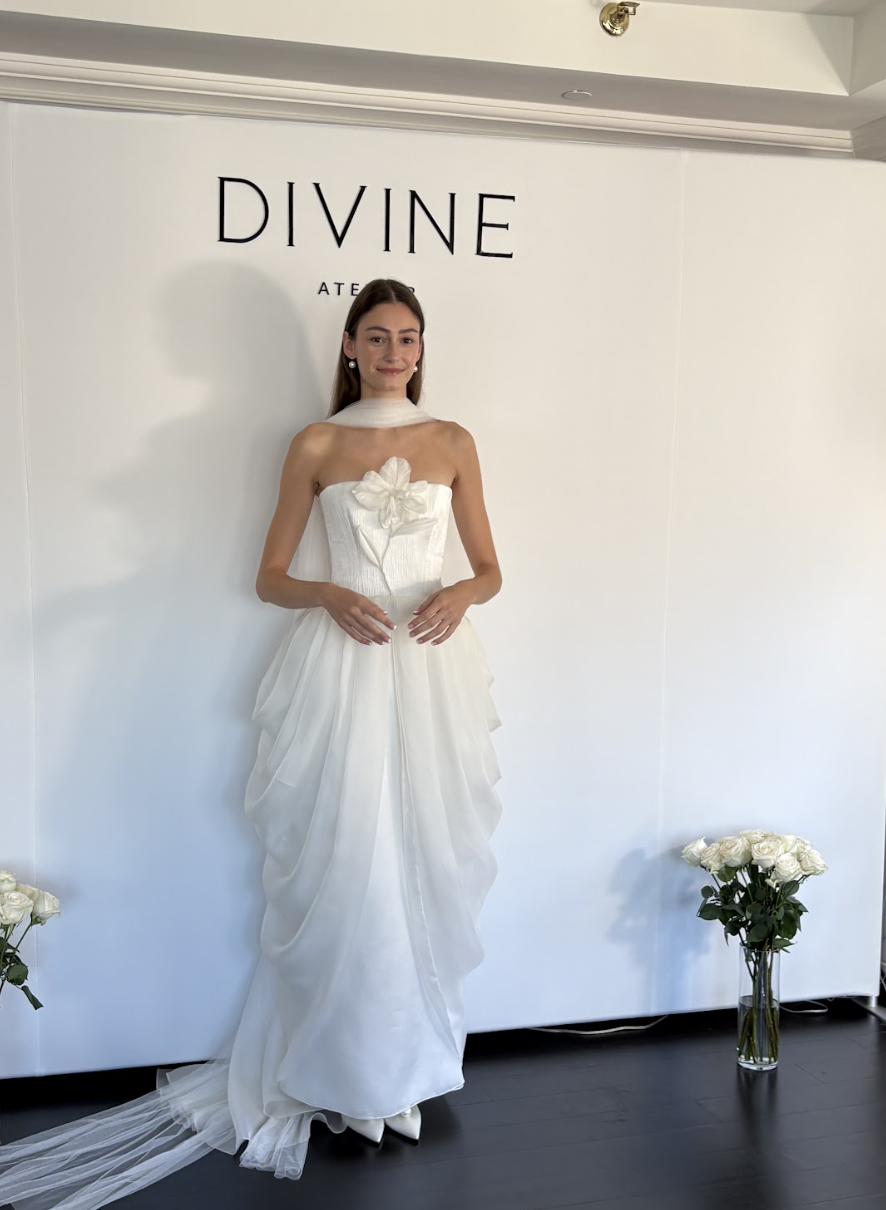
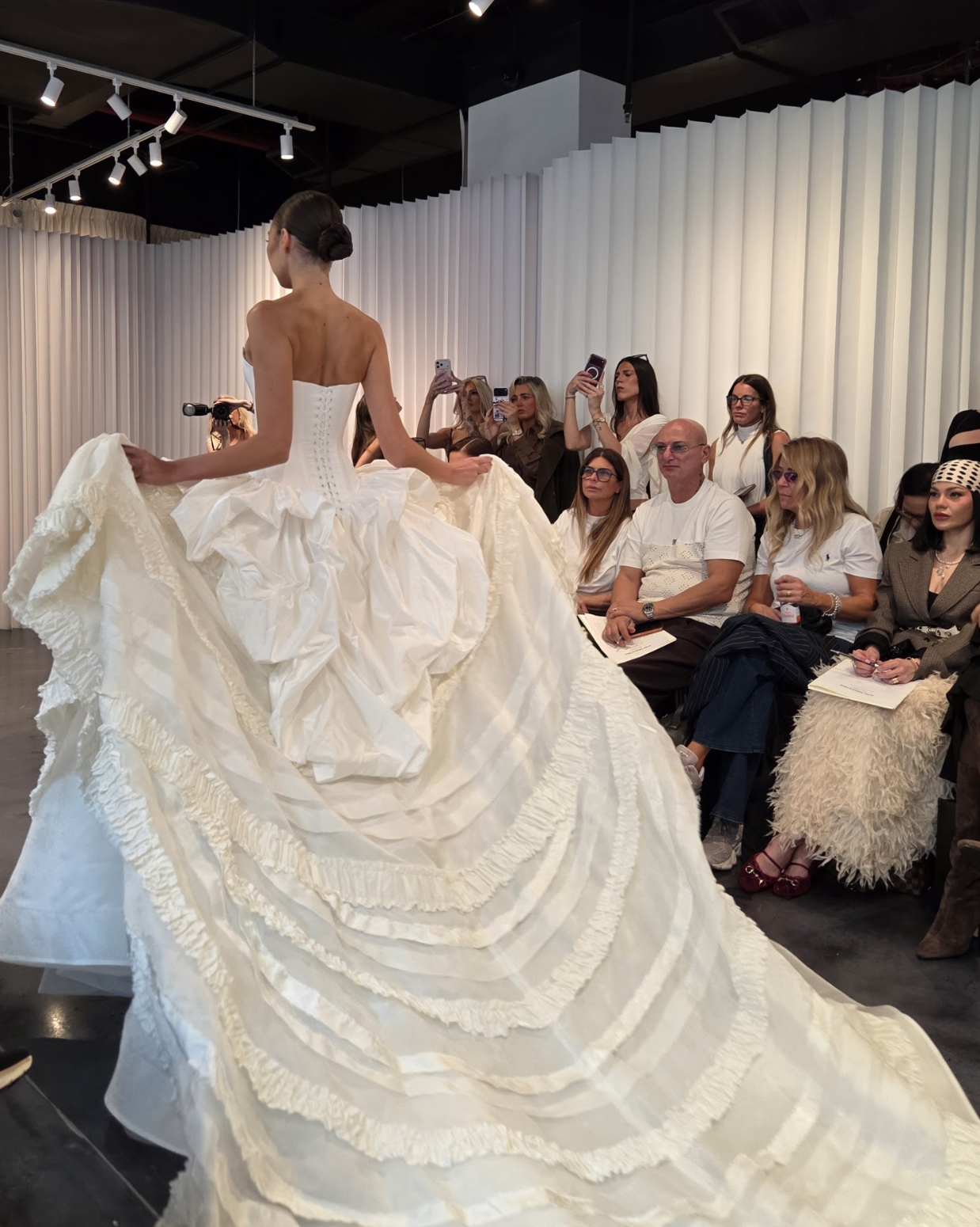
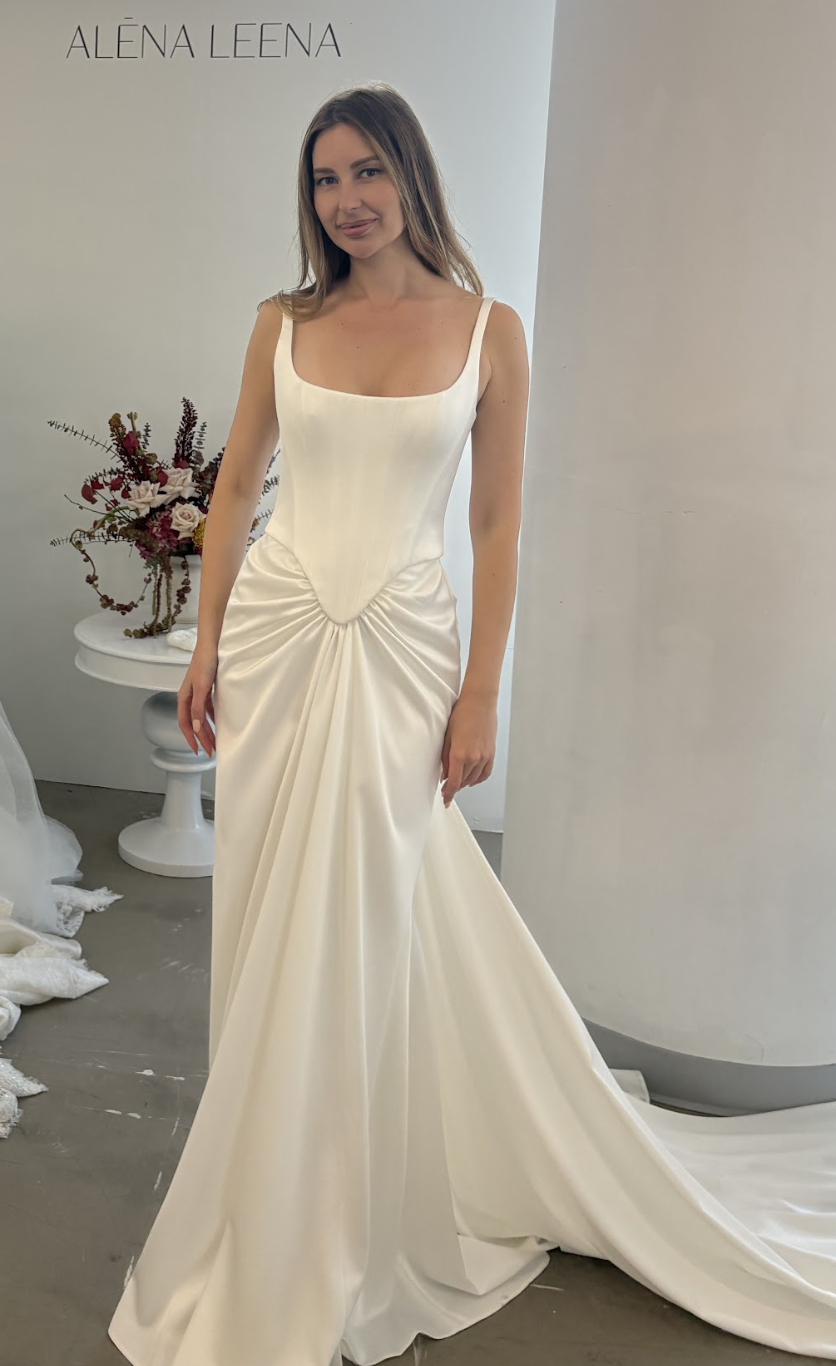
Another evolution that caught my attention was the cowl. Traditionally used to soften necklines and create fluidity through the back, it’s now being used to shape the skirt itself. A subtle shift, but one that opens up an entirely different conversation around silhouette. Finding a gown that feels like your version of bridal isn’t always easy. Some brides want simplicity with volume; others want something architectural that doesn’t feel overly structured. The cowl offers an interesting answer: soft folds that create dimension while keeping a sense of restraint. We saw this explored by Divine Atelier, Tom Sebastian, and Alena Leena, among others. Volume doesn’t always have to come from layers of fabric or traditional ballgown construction. Sometimes it comes from the way a single piece of fabric is shaped, folded, and allowed to move.
the impact of colour and tone
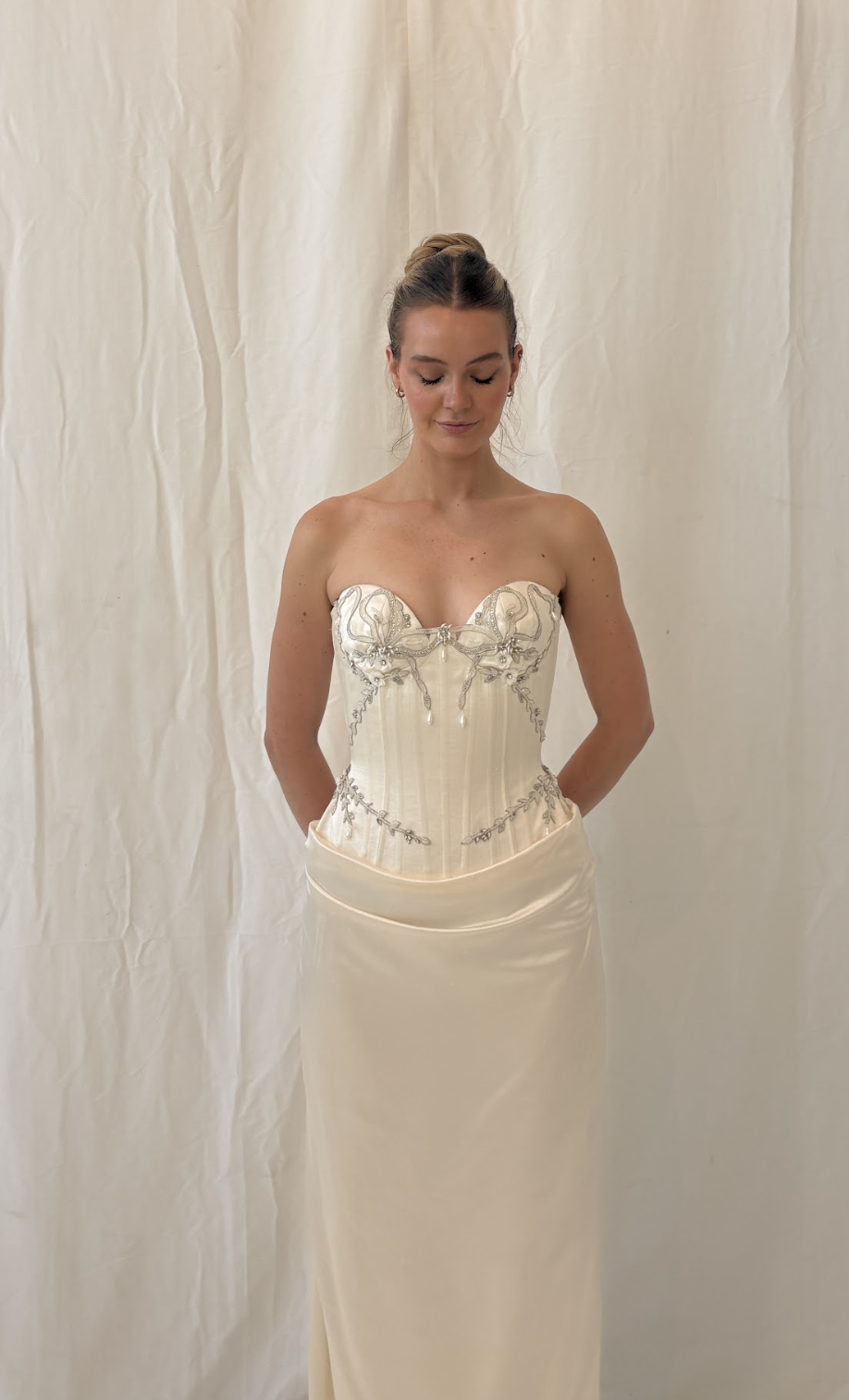
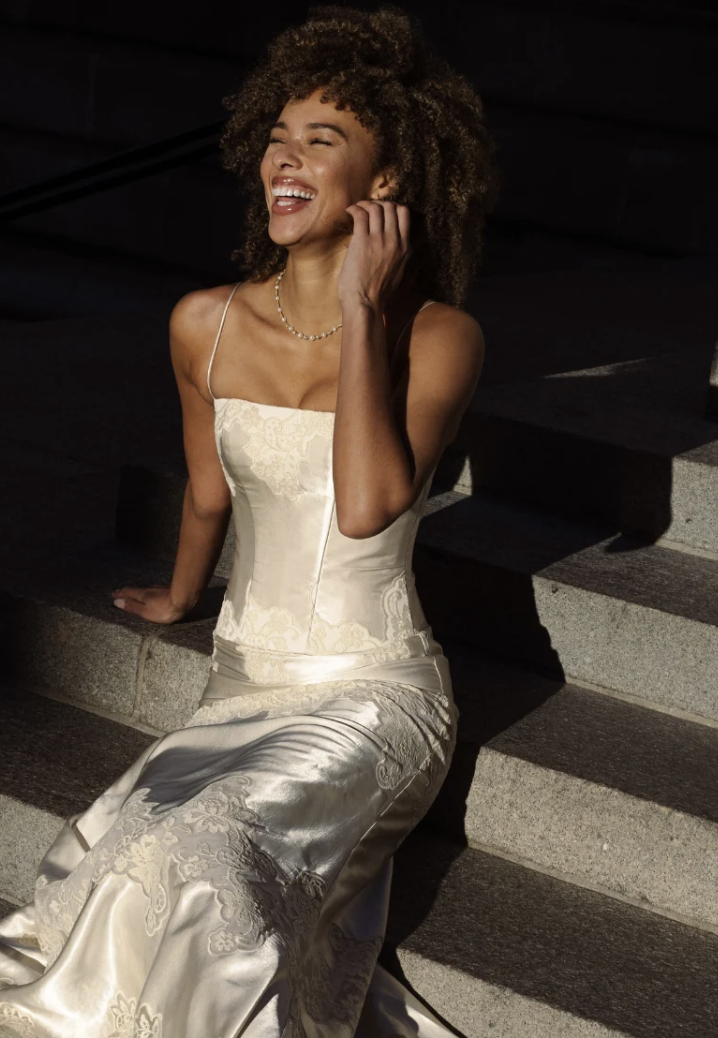
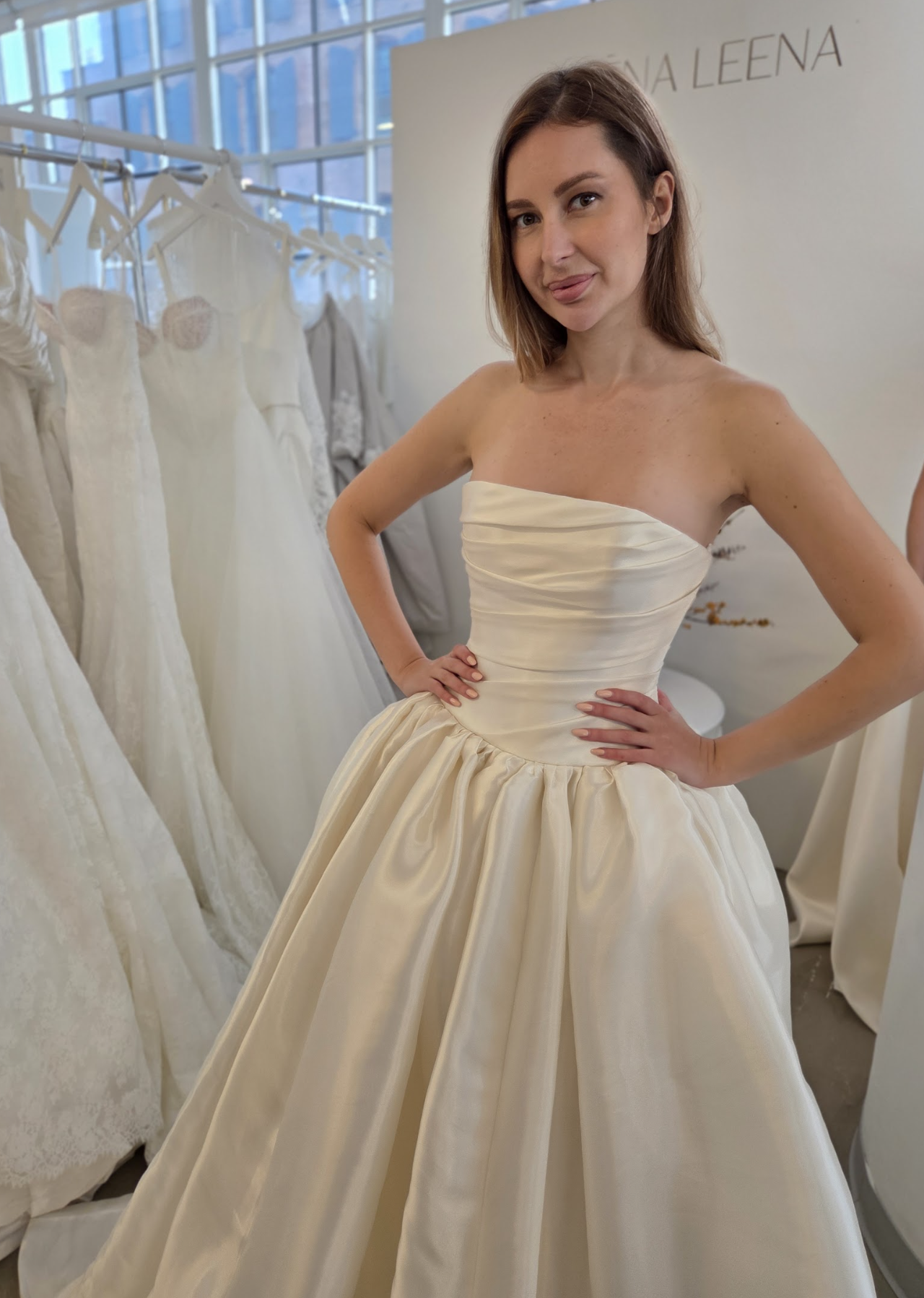
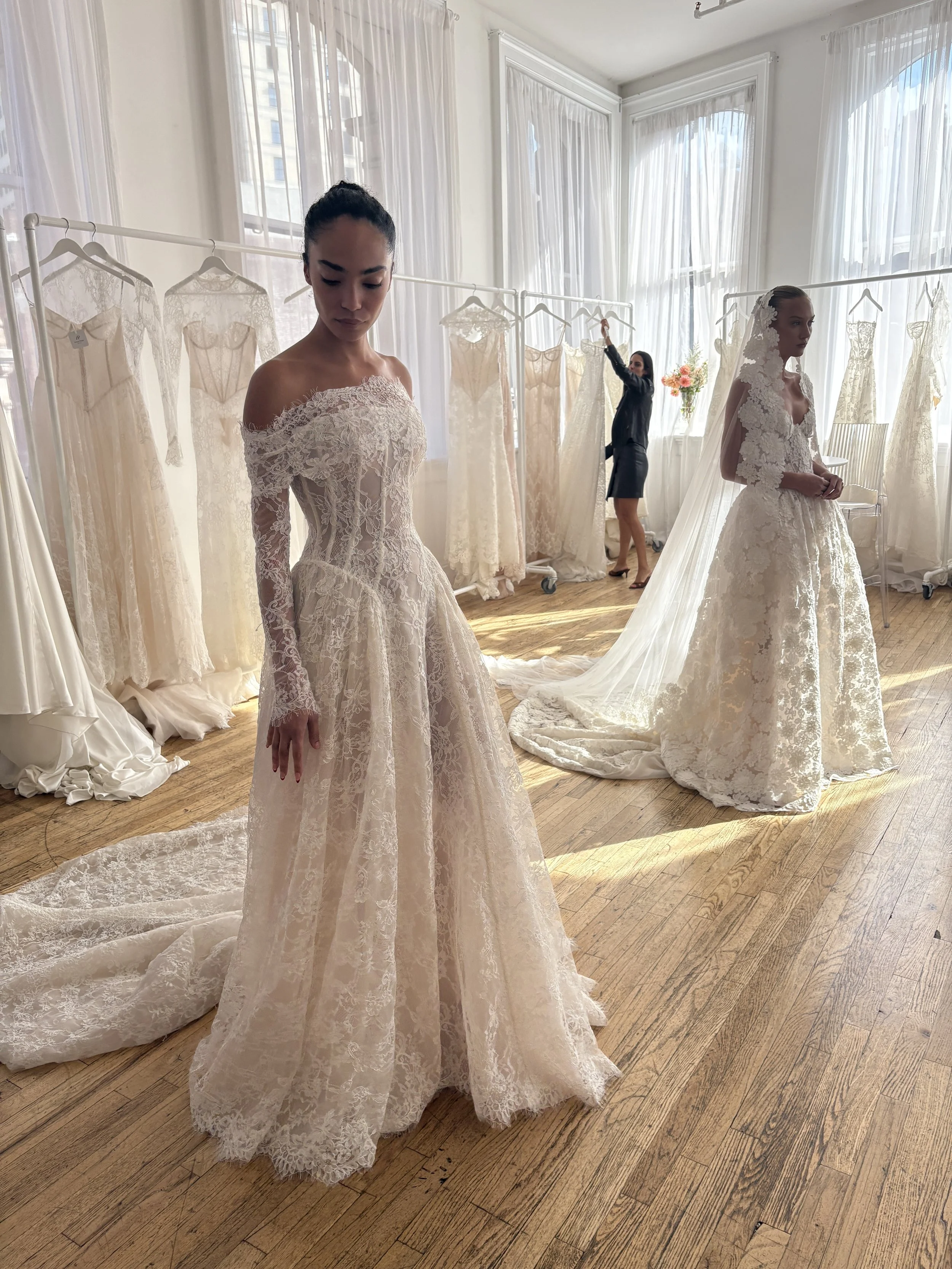
One of the more interesting shifts this Market was how colour is being used to build romance. Rather than a departure from traditional bridal, it feels like a return to old-world details: antique-inspired palettes, the warmth of ivory, the depth of champagne. What makes it compelling is how colour changes the way we experience a design. A warmer undertone can soften a structured silhouette. A hint of colour beneath lace can bring out its intricacy. For the bride who loves the idea of something timeless but doesn’t connect with an all-white gown, it’s another way to find that feeling. Colour doesn’t have to be bold to make a statement. Sometimes, it’s the smallest shift in tone that gives a gown its personality. The intention isn’t to make bridal less traditional, but to reconsider what tradition can look like today.
“What makes it compelling is how colour changes the way we experience a design. A warmer undertone can soften a structured silhouette. A hint of colour beneath lace can bring out its intricacy.”
beyond the trend
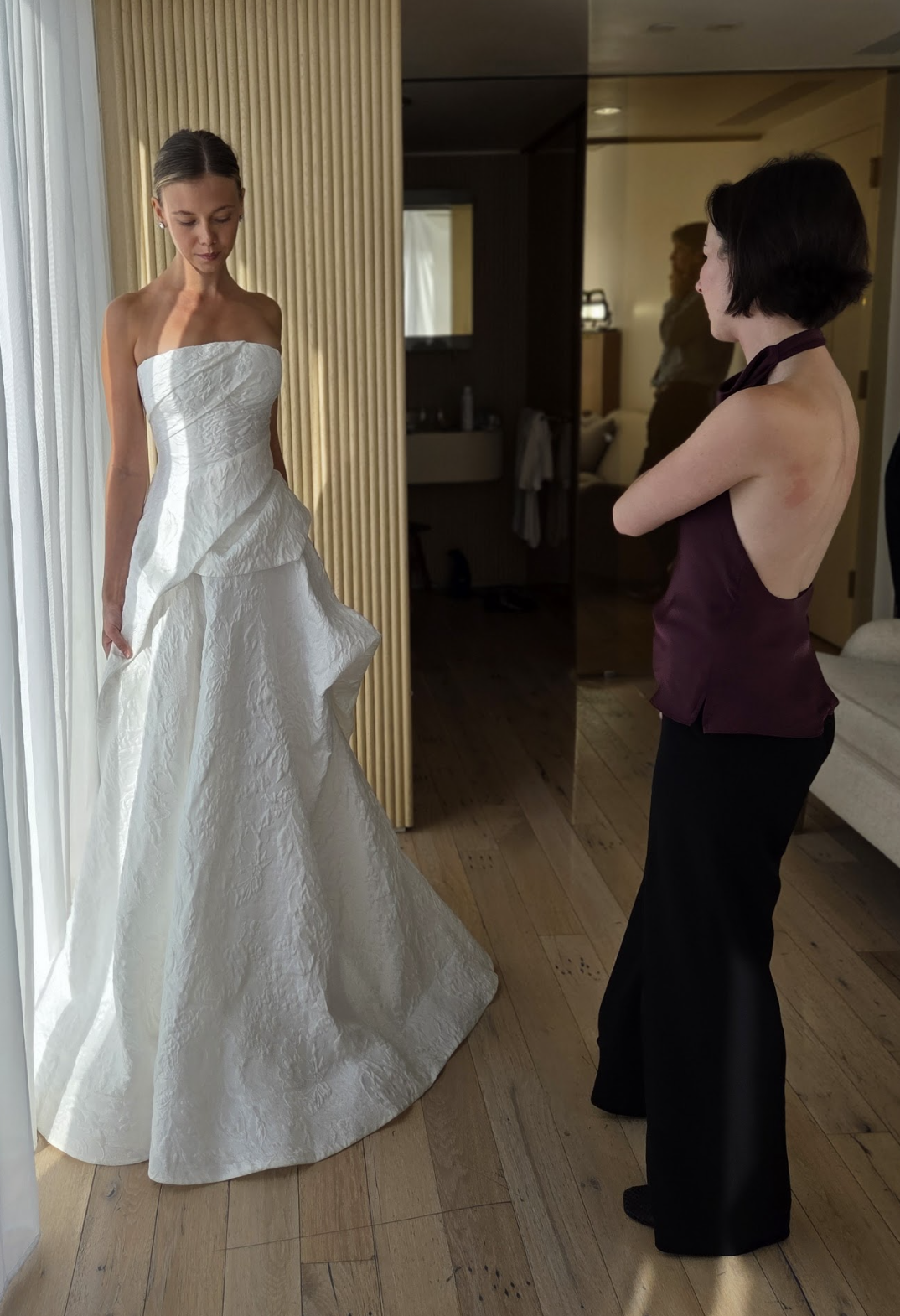
What I took away from this Market is that the most interesting developments in bridal aren’t about introducing something completely new. They’re about looking at what already exists and asking better questions. Can this silhouette be more flattering? Can this fabric deliver the same impact with less weight? Can a gown offer the grandeur a bride imagines without compromising the experience of wearing it? Trends give us a shared language, but it’s the designer’s interpretation that gives a trend its identity. And ultimately, that’s what makes a gown memorable: every decision feels considered, every detail has a purpose, and the final design feels like it could not have been any other way. That is the difference between following a trend and designing with intention.
“Trends give us a shared language, but it’s the designer’s interpretation that gives a trend its identity.”